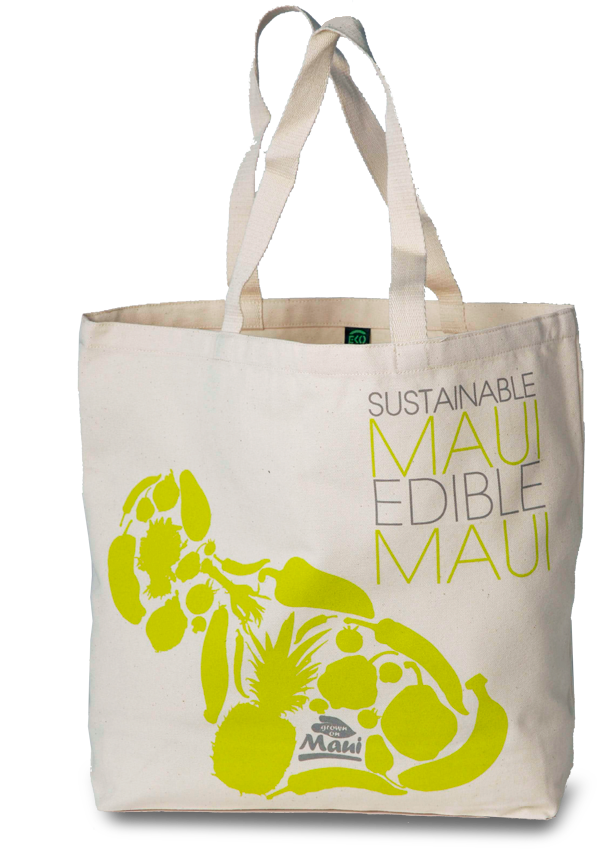
Grown on Maui

Grown on MauiThe Grown on Maui campaign is a joint effort between Maui County Office of Economic Development and Maui County Farm Bureau. It seeks to expand the market share of local farmers.

Why is this important? Buying Grown on Maui ensures that farming remains a viable lifestyle, and that the lands our keiki inherit can remain green. Buying local preserves our agricultural heritage and our connection to our ancestral roots. As Maui’s second-largest industry, agriculture enables tourism, Maui’s leading industry. Besides providing beauty for visitors, ag is at the core of agritourism, education and entertainment, and Maui as a culinary destination. In short, buying local is vital to our culture, our community, our economy, our health.

And we are lucky. Home to over 800 farms, Maui already grows a stunning variety of nutritious, flavorful foods, including heirloom varieties. With its multiple climates, it can grow foods year-round, and just about any crop. We believe that this is an agricultural privilege, and a responsibility.

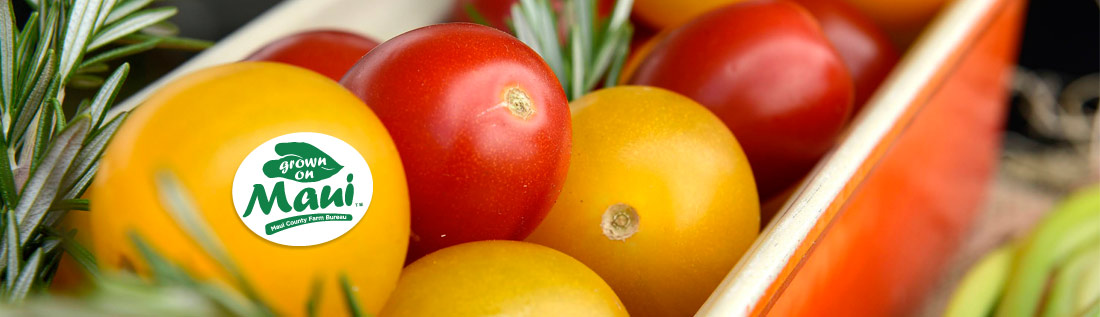
Are you a consumer?Look for our Grown on Maui seal when you shop for fresh foods and flowers. The Grown on Maui symbol assures you that what you purchase was grown locally on Maui.
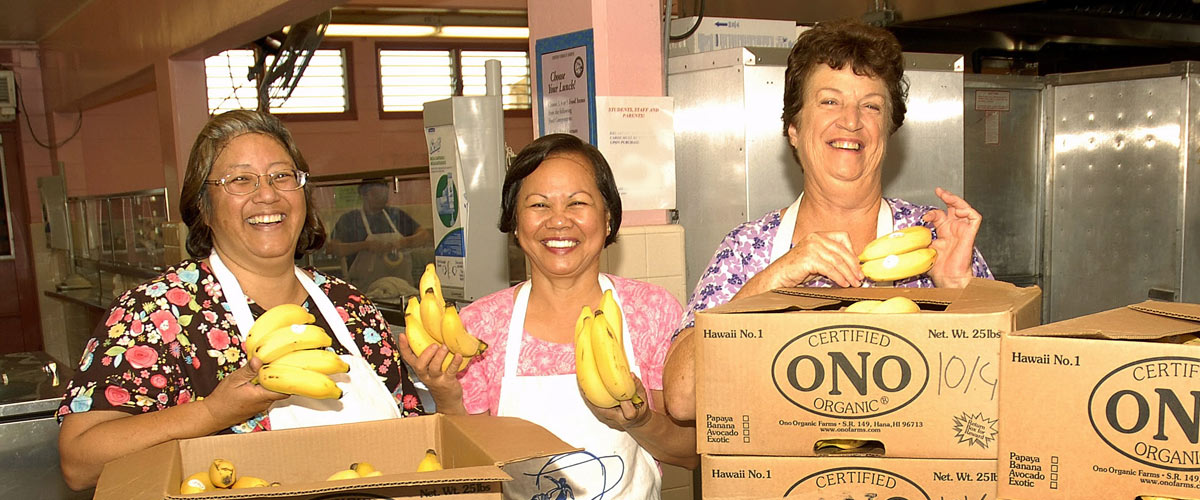
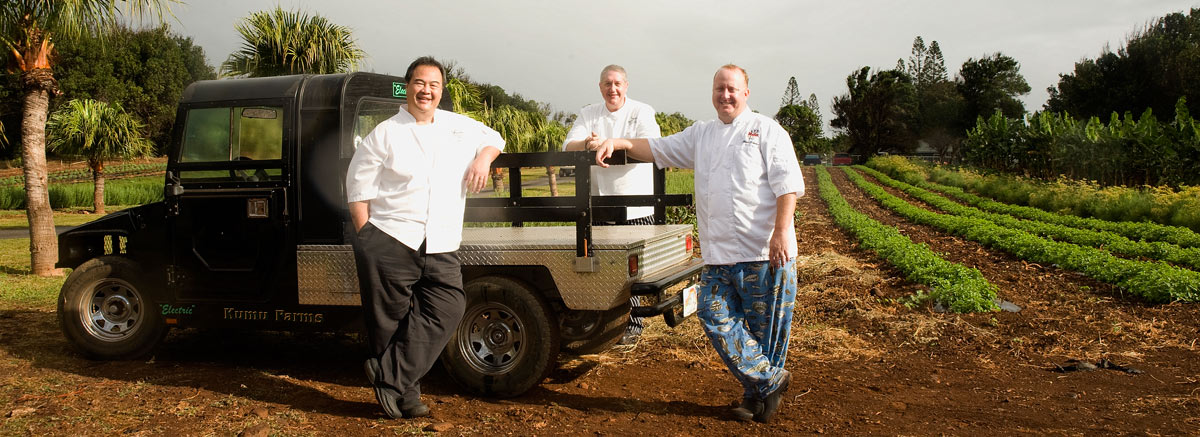
Chef Peter Merriman

"It’s not because I am so idealistic, but simply because it’s good business. The reality is that everything we grow here can be grown elsewhere probably more cheaply, but everything we grow here is of better quality." - Peter Merriman, Hula Grill, Friend of Ag winner, 2007.

Are you a farmer? Join our Grown on Maui marketing program to increase sales of your farm goods.

Are you a Friend of Ag? A partnership between Maui County Farm Bureau, Maui Nō Ka ʻOi magazine and the County of Maui, the annual Friend of Agriculture award program is designed to bring into the limelight those businesses that show exemplary support for products that are locally grown.

Maui Nō Ka ʻOi MagazineMaui County Farm Bureau Friend of Agriculture recipients are announced annually at the annual ‘Aipono Awards Gala hosted by Maui No Ka ‘Oi magazine.

Past recipients include:

2007 Peter Merriman, Hula Grill Ka’anapali
2008 James McDonald, Pacific’O, I’o, Feast at Lele, ‘Aina Gourmet and O‘o Farm
2009 Peter Merriman, Merriman’s Kapalua
2010 Jenna Haguaard, Flatbread Co.
2011 Justin Pardo, Market Fresh Bistro

Here are eleven reasons to buy local, one bite, one meal at a time:

  • When we support out farmers, the farm can stay in business, preserving managed open space.
  • When we circulate dollars within the community, we strengthen our local economy.
  • Knowing where our food comes from and who cared for it makes a difference.
  • Pick at its peak, local produce is flavorful, healthful, and fresh.
  • Buying local builds relationships.
  • Our chefs have created an entire cuisine that relies on local and fresh.
  • Our tourism industry depends on our farms and the greenness they provide.
  • Without agriculture, tourism, our number one economy, will cease.
  • Locally grown food is low-mileage food and contributes to clean air.
  • Our farms lessen dependence on imports.
  • Buying local today is an investment in the future.

Facts at a Glance:

  • Statewide, agriculture and its value-added products contribute $2.9 billion to the economy.
  • Revenues directly from the state’s 5,500 farms top $575 million.
  • Agricultural sales for Maui County top $124.5 million per year. The average pay for agricultural hired workers in early 2006 was $11.95; Hawaii’s minimum wage is $7.25.
  • Statewide, about 1.9 million acres, 47 percent of Hawaii’s total land area are agricultural.
  • Maui is home to about 800 farms; 55 percent of its 260,000 area is in ag. Diversified agriculture is rapidly expanding; it accounts for about 70 percent of farm revenue.
  • Of Hawaii’s farms, 92 percent are smaller than 100 acres.
  • One acre of agricultural land about the size of a football field can produce 42,900 pounds of strawberries, 35,000 pounds of lettuce, or 11,600 pounds of sweet corn.
  • Hawaii imports about 80- 90 percent of its food.
  • Imported produce travels an average of 1500 miles across the mainland. Imported produce flies 2,400 miles across the Pacific. Chances are, a Maui farmers is growing produce within a 25-mile radius of your home.
  • It takes at least ten calories of energy to obtain one calorie of imported food.
  • Traveling produce is picked before its prime. What it loses in freshness, it gains in packaging and transportation costs.